
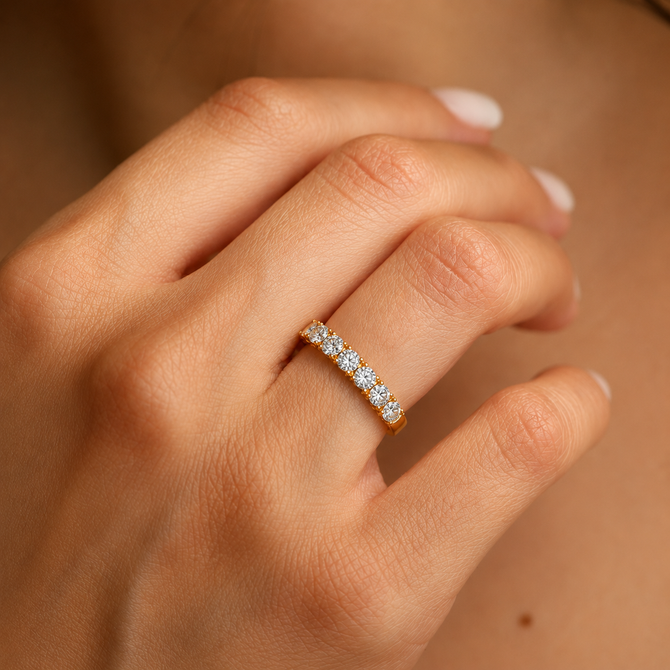
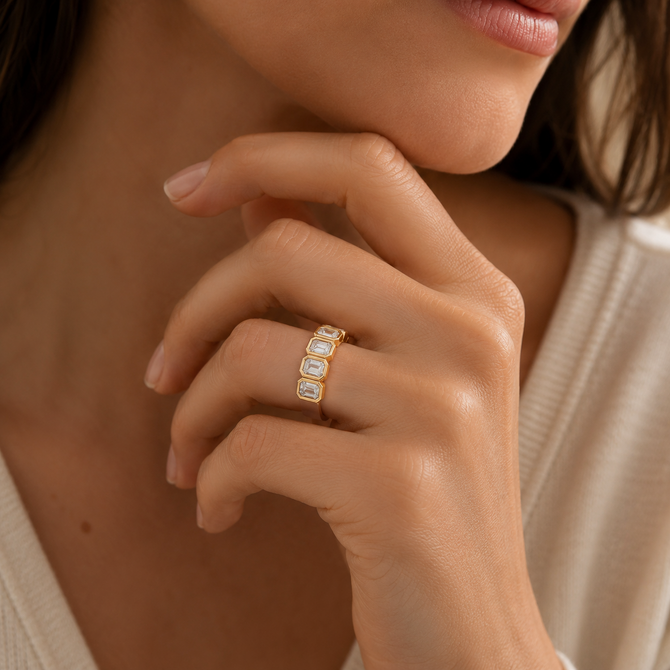
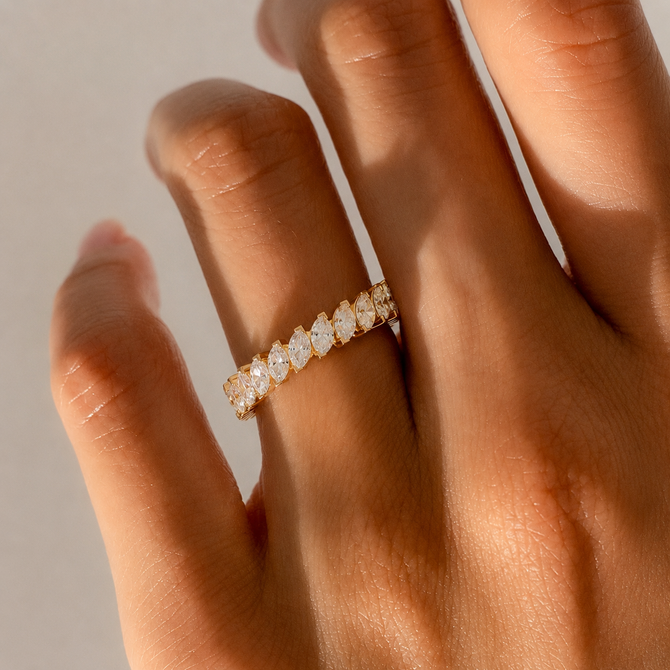
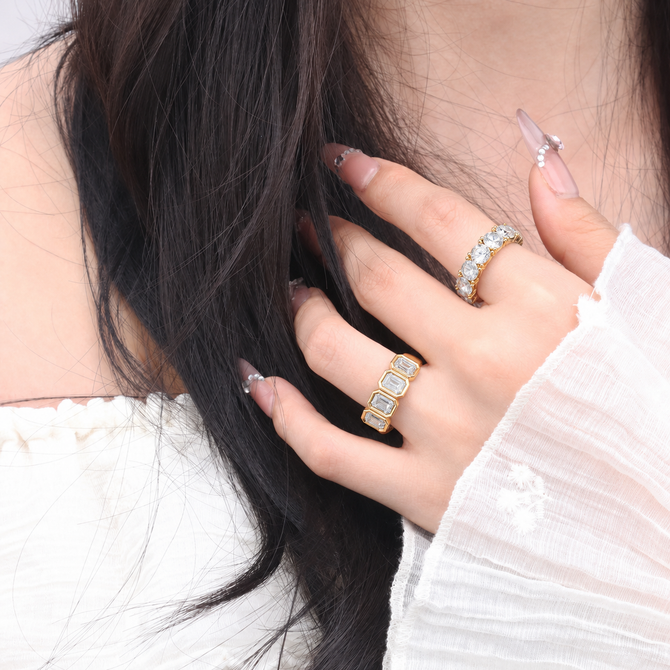
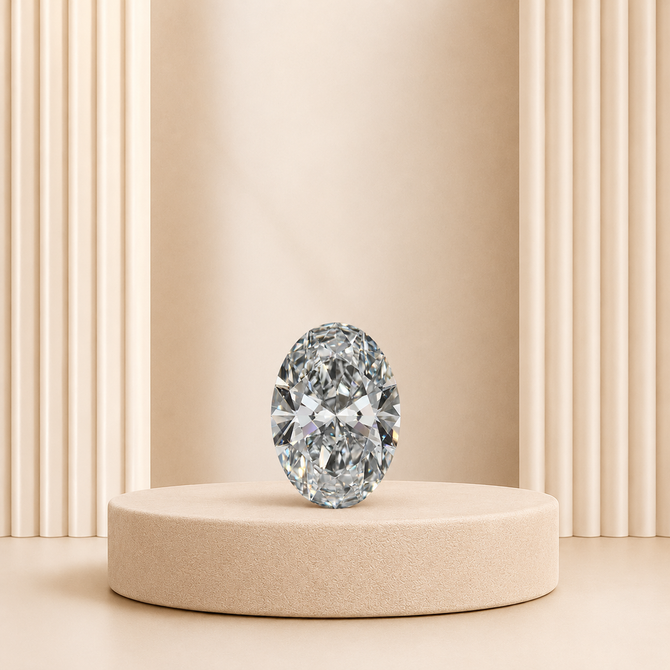

We have shown customers two diamonds side by side. With the same weight, the same colour, and the same clarity. One of them lit up the room. The other looked like a piece of glass. They wanted to know what was wrong with the second one. Nothing was wrong. The clarity was fine. The colour was fine. The cut was not. And that was the whole story.
Understanding diamond cut grades explained this difference immediately. Once you know what a cut does to a diamond, you stop shopping by carat and start shopping by light.
Also read: What Is GCAL 8X Certification
The 4Cs: And Why Cut Wins Every Time
GIA built the 4C system: cut, carat, colour, clarity. All four matter. But they do not all matter equally.
Colour goes from D to Z. D is completely colourless. As you move toward Z, yellow becomes visible.
Clarity is about what is inside the diamond. Inclusions & blemishes. Graded from Flawless to Included.
Carat is just mass. 200 milligrams per carat.
Cut is proportions, symmetry, polish. How the diamond was shaped and finished after it came out of the ground.
GIA itself says it. Among the 4Cs, cut is the most complex and the most important factor in bringing a diamond's beauty to life. That is diamond cut importance coming directly from the people who invented the grading system.
A D colour Flawless diamond with a poor cut will disappoint you. A lower grade diamond with an Excellent cut will make people stop and look. We have seen this happen in person more times than we can count.
What Diamond Cut Means
Shape and cut are not the same thing. We see this confusion every day. For example: round, oval, pear, these are shapes. Cut is what happens inside the diamond when light enters it.
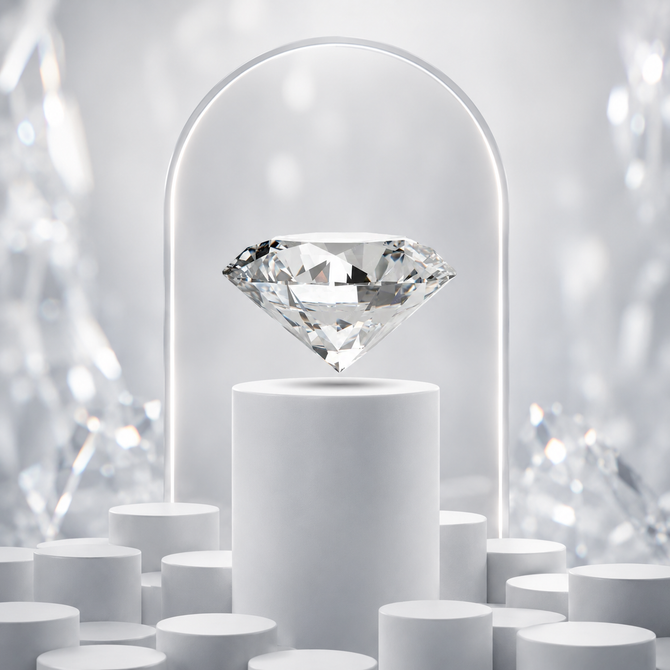
A round brilliant cut diamond has 57 or 58 facets. Small angled surfaces, placed with real precision. When the proportions are right, three things happen.
-
Brilliance is the white light that comes back through the top.
-
Fire is when that light breaks into colour flashes.
-
Scintillation is the sparkle you see when your hand moves.
Get those angles wrong and light leaks out the sides or the bottom. You paid for a diamond that is quietly underperforming.
An Ideal cut diamond fixes that. Light enters, bounces the way it should, and comes back to your eye at full strength. That is what cut does. And that is why we always talk about it first.
Read more: GCAL 8X vs GIA vs IGI
Diamond Cut vs Carat Weight: A Real Comparison
Let's put two diamonds next to each other.
Option A: 1.50 carat, Excellent cut
Option B: 2.00 carat, Fair cut
Option B weighs more. It costs more. But when you hold both under light, Option A wins. A 0.9-carat diamond with an Excellent cut can appear more luminous than a 1.5-carat diamond with a Fair cut. And this is not our opinion. It is physics.
This is the part of diamond buying guide information that most US buyers miss. The assumption is that bigger always equals better for engagement rings. But diamond sparkle vs. carat weight is not even a close contest when you are comparing good cut to bad cut.
|
Factor |
Excellent Cut |
High Carat, Poor Cut |
|
Sparkle |
High |
Low |
|
Brilliance |
High |
Reduced |
|
Fire |
Strong |
Minimal |
|
Perceived size |
Larger than actual |
Smaller than actual |
|
Value retention |
Strong |
Moderate |
That is diamond cut vs. size in real life. And there is another thing a strong cut does that most people do not realise. It covers for lower clarity and colour. The brilliance is so intense that small inclusions never catch the eye. Which means you can come down a grade or two on clarity, spend less, and still walk out with a diamond that looks better than something that costs more.
Why Cut Matters Even More for Lab-Grown Diamonds
Lab-grown diamonds are chemically identical to mined diamonds. You get the same carbon, the same hardness, and the same optical properties. What separates a premium lab-grown from an average one is almost entirely cut quality.
Over 50% of round brilliant cut diamonds receive an Excellent grade from traditional labs. Less than 1% qualify for GCAL 8X. That gap is one of the most important things to note here.
GCAL 8X covers eight factors, including optical brilliance, fire, scintillation, and hearts and arrows. These are measurable differences in how the diamond truly performs under light.
When you are spending a lot of money, lab-grown diamond cut quality is where that money does the most work.
How to Prioritize Your Diamond Budget
When buying the best diamond for an engagement ring or something else, you must have a fixed budget in mind. And here is the order we tell every customer to follow.
1 Cut: Always Excellent or Ideal. A diamond that does not sparkle is not doing its job, regardless of how much it weighs.
2 Carat: Once the cut is locked, see what size fits the remaining budget.
3 Colour: G to I looks white in most settings. D and E are unnecessary unless the budget is genuinely open.
4 Clarity: VS2 or SI1 looks identical to Flawless without a loupe.
FAQs: Diamond Cut Importance
1. Is cut more important than carat weight?
Yes. Cut decides how the diamond handles light. Carat is just weight. A smaller excellent-cut diamond almost always looks better.
2. Can a smaller diamond look bigger than a larger one?
Yes. A well-cut 0.90-carat diamond can appear as wide as a poorly cut 1.00-carat diamond because of how it returns light.
3. What is the most important diamond quality?
Cut. Every experienced gemologist says the same thing. You cannot fix a bad cut with better colour or clarity.
4. What cut gives the most sparkle?
Round brilliant cut diamond. Its 57 to 58 facets are built specifically to maximise brilliance and fire above every other shape.
5. Does diamond cut affect value?
Yes. Well-cut diamonds hold value better because demand stays consistent. Poorly cut diamonds are harder to resell regardless of carat weight.
6. Should I prioritize cuts when buying an engagement ring?
Always. The ring is worn every day. How it looks in real light depends almost entirely on cut. Buy the best cut first.


